

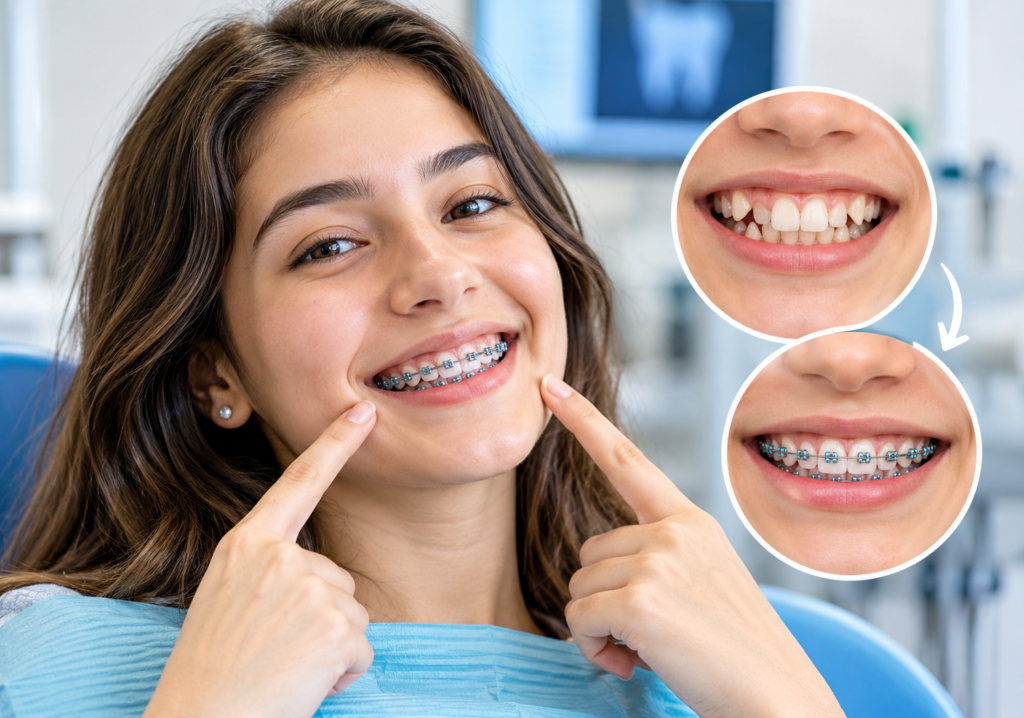
If you’ve ever hidden your smile in photos, you know how much crooked teeth can bother you. Braces on crooked teeth remain one of the most dependable fixes, whether your teeth are crowded, twisted, gapped or slightly out of line.
This guide explains how braces on crooked teeth work, how long treatment usually takes and what to expect from your first appointment to the day the brackets come off.
Not sure if braces are right for you? Book a consultation with our orthodontic team at Radix Dental Care and get a clear plan before you commit.
Why Teeth Become Crooked in the First Place
Some people inherit a small jaw with too little room. Others develop problems from thumb sucking, losing baby teeth early or a tooth drifting after an extraction. Dentists call these alignment issues malocclusion, and braces on crooked teeth can correct most of them, including:
- Crowding, where teeth overlap because there isn’t enough space
- Gaps between teeth
- Overbite, underbite and crossbite
- Rotated or tilted teeth that are hard to clean
How Braces on Crooked Teeth Actually Work
Dental braces apply gentle, constant pressure that moves each tooth a fraction of a millimetre at a time. The force is small, but because it never lets up, the teeth gradually shift.
The Science Behind Tooth Movement
Each tooth is held in its socket by a thin cushion of fibres called the periodontal ligament. When braces on crooked teeth push a tooth in one direction, bone on the pressure side breaks down while new bone builds up behind it. This natural process, called bone remodeling, lets the tooth travel through the jaw safely.
The Parts That Do the Work
- Brackets are bonded to each tooth and act as small handles.
- The archwire threads through the brackets and gets swapped for stiffer wires as treatment moves along.
- Elastic ties hold the wire in place, while rubber bands between the jaws correct the bite.
Types of Braces for Crooked Teeth
- Metal braces are the toughest and most affordable, and they handle severe crowding well.
- Ceramic braces use tooth-coloured brackets that blend in but need care to avoid stains.
- Lingual braces are fixed behind the teeth, so they’re invisible from the front.
- Clear aligners are removable trays best suited to mild or moderate cases.
Torn between the first two? Our breakdown of the difference between ceramic braces and metal braces compares cost, comfort and durability. Each option works as braces on crooked teeth, but your bite decides which one fits best.
How Long Do Braces Take to Straighten Teeth?
Most people wear braces on crooked teeth for 12 to 24 months. Small gaps can close in under a year, while complex bite problems may take closer to three years. Your timeline depends on:
- How severe the crowding or bite issue is
- Your age, since younger jawbones respond faster
- Whether you keep your adjustment appointments
- How consistently you wear elastics or aligners
Can Adults Get Braces on Crooked Teeth?
Yes. There’s no upper age limit for orthodontics. Adult bone is denser, so teeth move a little slower, but the results are just as good. Adults often combine braces on crooked teeth with other care too. If a tooth is missing, braces can open up the right space before you go ahead with dental implant treatment in Esplanade.
What to Expect with Braces on Crooked Teeth
Your First Consultation
The orthodontist examines your bite, takes photos and orders dental X-rays to check roots and bone. These records map out how each tooth needs to move before any braces on crooked teeth go on.
Fitting Day and the First Week
Fitting braces on crooked teeth takes one to two hours and doesn’t hurt, though your jaw may feel tired. Expect tenderness for three to five days afterwards. Soft food, orthodontic wax for cheek rubbing and a mild painkiller usually help.
Regular Adjustments
You’ll return every four to eight weeks to have the wire tightened or replaced. Each visit takes treatment with braces on crooked teeth one step closer to the final result.
Living with Braces on Crooked Teeth
Hard and sticky foods can snap brackets or bend wires, so skip popcorn, nuts, toffee and chewing gum, and cut apples or corn into small pieces. Food also gets trapped easily around braces on crooked teeth, raising the risk of plaque and white spots. Brush after meals, use an interdental brush between brackets and floss daily with a threader or water flosser.
What Happens After Braces Come Off
Once your teeth are in position, the brackets are removed and the glue is polished away. Teeth naturally try to drift back, so you’ll wear a retainer, usually full-time for a few months and then at night long term. Skipping it is the main reason results from braces on crooked teeth fade.
Some patients follow straightening with whitening, bonding or gum contouring as part of a wider smile correction plan.
Are Braces on Crooked Teeth Worth It?
Beyond looks, aligned teeth are easier to clean, wear more evenly and put less strain on the jaw joints. Crowded teeth trap plaque and raise the risk of gum disease. That makes braces on crooked teeth an investment in long-term oral health, not just confidence.
Teeth straightening takes patience, but the process is predictable and well proven. With the right appliance, regular check-ups and a retainer afterwards, braces on crooked teeth can give you results that last for decades. Our team provides complete orthodontic treatment for children, teens and adults, beginning with a detailed bite assessment.
Ready to see what your smile could look like? Contact Radix Dental Care to book your orthodontic assessment in Park Street.
FAQs
Do braces on crooked teeth hurt?
You’ll feel pressure and mild soreness for a few days after fitting and after each adjustment. It’s more uncomfortable than painful and fades quickly.
Can braces on crooked teeth fix an overbite too?
Yes. Braces straighten individual teeth, and elastics help correct how the upper and lower jaws meet.
Are clear aligners as effective as braces on crooked teeth?
For mild to moderate crowding, aligners work well. Severe rotations and complex bite problems usually respond better to fixed braces.
What is the best age to get braces?
Most children start between 10 and 14, once permanent teeth are in. Adults can begin at any age if their gums and bone are healthy.
Will my teeth move back after braces?
They can if you stop wearing your retainer. Wearing it as instructed is the simplest way to protect your new smile.
Can I eat normally with braces on crooked teeth?
Mostly, yes. Cut harder foods into small pieces and avoid sticky sweets, nuts and gum until treatment ends.