

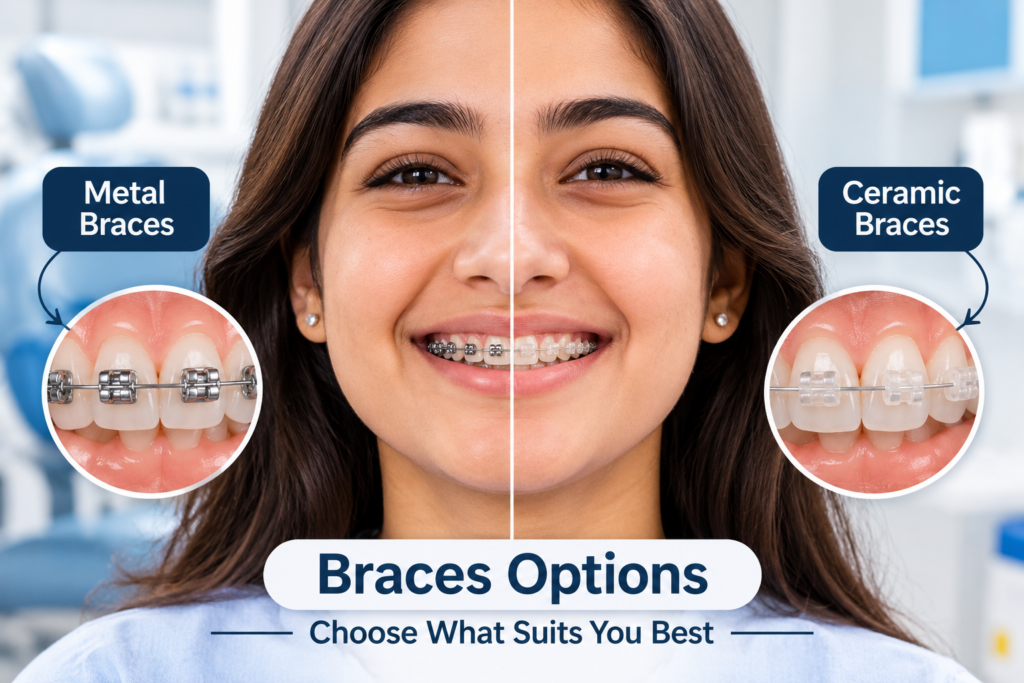
Almost every adult who sits in our chair for a braces consultation asks the same thing within the first five minutes. “Can I get the clear ones?” Usually, yes. But looks are only one part of the difference between ceramic braces and metal braces, and the other eight parts decide whether you’ll be happy with your choice 18 months from now.
Both types use brackets bonded to the teeth and a wire that slowly guides them into place. Both fix the same problems, from crowding to gaps to a deep bite. Where they differ is in strength, upkeep, cost and how they behave day to day.
Ceramic Braces vs Metal Braces at a Glance
| Factor | Traditional metal braces | Ceramic braces |
| Visibility | Clearly visible | Blend with tooth colour |
| Strength | Very strong | More brittle, can chip |
| Bracket size | Smaller | Slightly bulkier |
| Staining | Brackets don’t stain | Elastic ties can stain |
| Cost | Lower | Higher |
| Best for | Complex cases, children, teens | Adults, mild to moderate cases |
9 Differences Between Metal and Ceramic Braces
1. How they look
Traditional metal braces use stainless steel brackets, and there’s no hiding them. Ceramic brackets are made from tooth-colored or clear material, usually a form of aluminium oxide, so from a normal speaking distance most people won’t notice them. For working professionals and college students, this one factor often settles the matter.
2. Strength and breakage
Steel bends. Ceramic cracks. Metal brackets handle years of chewing and the odd accidental bite on a hard bhutta without trouble. Ceramic brackets are tough, but a chipped bracket means an extra visit to replace it. If you’re a nail-biter or love chewing ice, factor that in honestly.
3. Bracket size and comfort
To match the strength of steel, ceramic brackets are made a little larger. Most patients adjust within two weeks either way, but some find ceramic brackets rub the inside of the lips slightly more at first. Orthodontic wax helps in both cases.
4. Staining and discoloration
The ceramic brackets themselves resist stains. The elastic ties holding the wire are another story. Turmeric-heavy curries, strong tea, coffee, and paan can tint them yellow, which spoils the “invisible” effect. Thankfully, ties get changed at every adjustment visit, roughly once a month. With metal braces, nobody notices a stained tie against a silver bracket.
5. Effect on your enamel
This one gets talked about too little. Ceramic is harder than tooth enamel, so a bracket that touches the opposite teeth during biting can wear them down. That’s why many orthodontists place ceramic brackets on the upper teeth and metal ones on the lower teeth, a mixed setup patients sometimes call metal-ceramic braces. Removing ceramic brackets at the end also needs a little more care, since they’re bonded firmly and don’t flex the way steel does.
6. Treatment time
Wires slide slightly more easily through metal brackets, which has led to the belief that ceramic braces always take longer. In practice, treatment length depends mostly on the problem being fixed. Many cases finish in 12 to 24 months with either option, and your orthodontist can tell you if your case is likely to run longer with ceramic.
7. Cost
Ceramic brackets cost more to manufacture, so ceramic treatment is priced higher than traditional metal braces. Replacing a broken ceramic bracket also costs more than replacing a steel one. If budget is a real concern, metal gives you the same final result for less.
8. Who each type suits
For children and young teens, we usually recommend metal. Kids are rough on their braces, and many of them actually enjoy picking coloured elastics each month. Severe malocclusion, jaw discrepancies and cases that need heavy force also do better with steel. Ceramic suits adults and older teens with mild to moderate crowding or spacing who care about appearance at work or in photographs.
9. Sports, scans and daily life
Both types need a mouthguard for contact sports. Metal brackets can create distortion on head and neck MRI scans, while ceramic brackets cause less of it, though the wire is still metal. Neither type affects routine dental X-rays, which we take before planning treatment anyway, so we can see roots, bone and any hidden issues first.
Which Should You Choose?
Here’s a simple decision rule we share with patients. If you’re under 16, have a complex bite, or want the lowest-cost route, choose metal. If you’re an adult, your case is mild to moderate, and visible braces would genuinely bother you, ceramic is worth the extra cost. And if you’re torn, the upper-ceramic, lower-metal combination often gives the best balance of looks and durability.
One more thing. The braces matter less than the person adjusting them. A well-planned treatment with either type beats a rushed one with the “better” bracket. You can read about our full range of orthodontic treatments at Radix Dental Care, or meet Dr. Debasis Das for a proper assessment before deciding.
Frequently Asked Questions
Are ceramic braces as effective as metal braces?
Yes. Both straighten teeth equally well. Metal handles severe cases and heavy forces a little better.
Which is more painful, ceramic or metal braces?
Neither is noticeably more painful. The pressure you feel comes from the wire, and that’s the same in both. Ceramic brackets may rub the lips slightly more in the first couple of weeks because they’re bulkier.
Do ceramic braces turn yellow?
The brackets don’t. The elastic ties can stain from curry, tea and coffee, but they’re replaced at every adjustment visit.
Can I switch from metal to ceramic braces midway?
It’s possible in some cases, but it means rebonding new brackets and adds cost. Most orthodontists advise choosing carefully at the start.
What is the best age for metal and ceramic braces?
Treatment often starts between 10 and 14, when jaws are still growing, but adults of any age can get braces as long as their gums and bone are healthy.
Are metal ceramic braces a real option?
Yes. Many patients get ceramic brackets on the upper teeth, where they show most, and metal brackets on the lower teeth, which protects the upper enamel and keeps costs down.
How long do I need to wear braces?
Usually 12 to 24 months, followed by a retainer to hold the teeth in their new position.
Book Your Braces Consultation in Park Street
Still weighing ceramic braces vs metal braces? The fastest way to decide is a 20-minute check-up where we look at your bite, take the necessary X-rays and tell you which option suits your case and lifestyle. Contact Radix Dental Care to book a consultation at our Park Street clinic, and walk out knowing exactly what your treatment would involve.