

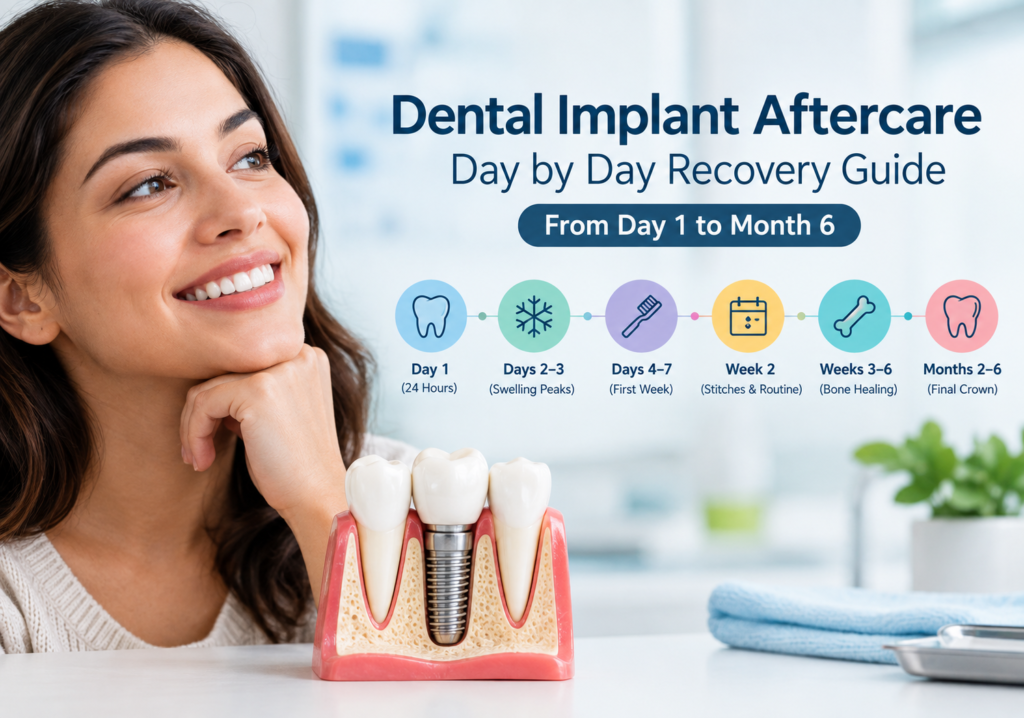
The surgery itself usually takes an hour or two. The healing takes months, and that’s where most of the real work happens. Good dental implant aftercare keeps swelling in check, protects the surgical site and gives the titanium post the undisturbed time it needs to bond with your jawbone. Skip the basics and you risk infection, delayed healing or, in rare cases, a failed implant.
This guide breaks recovery into clear stages so you know what’s normal, what to do and when to call your dentist.
Quick answer: Dental implant aftercare means keeping gauze on the site for the first hour, using cold packs for 48 hours, eating soft foods, and avoiding straws, smoking and spitting. After day 2, gentle salt-water rinses and careful brushing begin. Between months 2 and 6 the implant fuses with the bone, after which your final crown is fitted.
Why Care After Implant Surgery Matters So Much
A dental implant works because bone grows tightly around the post in a process called osseointegration. Anything that disturbs the site early on, like a lost blood clot, bacteria or too much chewing pressure, can slow that bond. Poor hygiene later can also lead to peri-implantitis, an infection of the gum and bone around the implant. Careful habits in the first few weeks do most of the protective work.
Day 1: The First 24 Hours
Your mouth will still be numb when you leave the clinic. Use that time to get settled before the anaesthesia wears off.
- Bite gently on the gauze pad for 30 to 60 minutes to control bleeding. Light oozing through the day is normal.
- Hold a cold pack against your cheek, 20 minutes on and 20 minutes off.
- Take any prescribed medicines exactly as your dentist directed, ideally before the numbness fades.
- Stick to cool liquids and very soft food. Hot drinks can restart bleeding.
Rest with your head slightly raised on an extra pillow. And no straws, no smoking, no forceful spitting. Each of these creates suction that can pull the clot out of place.
Days 2 to 3: When Swelling Peaks
Don’t be alarmed if your face looks puffier on day two or three than it did on day one. Swelling usually peaks around 48 to 72 hours and then starts easing. Mild bruising on the cheek or jaw can appear too.
From day 2, switch to warm, damp compresses instead of ice, since warmth helps the swelling settle. You can also start rinsing gently with warm salt water (half a teaspoon of salt in a glass of water) after meals. Let the water roll around your mouth and then tip it out rather than spitting.
Days 4 to 7: Tooth Implant Aftercare in the First Week
By now most people feel noticeably better. Pain should be dropping, not climbing. This is the stretch where tooth implant aftercare shifts from damage control to hygiene.
- Brush your other teeth normally with a soft brush, and go very lightly near the implant area.
- Keep up salt-water rinses two or three times a day. Your dentist may also prescribe a chlorhexidine mouthwash.
- Slowly add foods like scrambled eggs, soft rice, dal and well-cooked vegetables.
Chew on the opposite side wherever you can. The implant isn’t ready for any real load yet.
Week 2: Stitches and Back to Routine
If you had non-dissolving stitches, your dentist will remove them around day 7 to 14. The gums will look pink and fairly settled. Most people are back at work and their usual routine by this point, though heavy exercise is best kept light for a few more days if your dentist advises it.
Keep smoking off the table. Tobacco reduces blood flow to the gums and is one of the best-documented reasons implants fail to integrate.
Weeks 3 to 6: Healing Below the Surface
On the outside, things look healed. Underneath, the bone is only beginning to grip the post. Post dental implant care during this phase is about patience.
You can eat a wider range of foods, but avoid biting hard things directly on the implant side. Brush the area normally with a soft brush now, and your dentist may show you how to use a small interdental brush or water flosser around the healing cap.
Months 2 to 6: Bone Fusion and Your Final Crown
Osseointegration generally takes three to six months. Lower jaw implants often heal a little faster than upper jaw ones because the bone is denser. During this time you may have a temporary tooth, or simply a small healing cap.
Your dentist will check the implant with X-rays during follow-up visits. Once the bond is solid, an abutment is attached and your permanent crown is fitted. After that, you can chew normally.
Post Dental Implant Care Diet Guide
Foods That Are Easy on Healing Gums
- Curd, khichdi, mashed potatoes and soft paneer
- Smoothies eaten with a spoon (not a straw)
- Soups served lukewarm
- Soft fish and well-cooked lentils
Foods Worth Avoiding for a While
- Nuts, chips and hard crusts
- Sticky sweets and chewing gum
- Very spicy or very hot dishes in the first week
- Alcohol, which can interfere with healing and medicines
Warning Signs to Watch For
Some discomfort is expected. These signs are not:
- Bleeding that soaks through gauze after the first day
- Pain or swelling that gets worse after day 3
- Fever, pus or a bad taste that won’t go away
- An implant or healing cap that feels loose
If you notice any of these, call your dentist rather than waiting for your next appointment.
Long-Term Dental Implant Aftercare Habits
Implants can’t decay, but the gum and bone around them can still get infected. Brush twice a day, clean between teeth daily, and keep your six-monthly checkups. If you grind your teeth at night, ask about a night guard, since grinding puts heavy stress on implants. Good dental implant aftercare over the years is what separates an implant that lasts a decade from one that lasts a lifetime.
Planning an Implant in Kolkata?
If you’re considering dental implant treatment in Park Street, the team at Radix Dental Care will walk you through every stage, from planning to your final crown, with a written aftercare plan to take home. And if the tooth might still be saved, it’s worth asking about RCT treatment in Park Street before choosing extraction and an implant.
Frequently Asked Questions
How long does dental implant recovery take?
The gums usually heal in one to two weeks. Full bone fusion takes three to six months before the final crown goes on.
When can I eat normally after a dental implant?
Soft foods are fine from the first week. Normal chewing on the implant side should wait until your permanent crown is placed.
Can I brush my teeth the day after implant surgery?
Yes, brush your other teeth gently from day 1 and avoid the surgical site. Start cleaning near the implant softly from about day 4.
Is it normal for swelling to get worse after 2 days?
Yes. Swelling commonly peaks between 48 and 72 hours and then improves. Worsening after day 3 should be checked.
How soon can I smoke after getting an implant?
Ideally not at all during healing. Smoking is closely linked to slower healing and implant failure.
Do dental implants need special cleaning for life?
Mostly the same brushing and flossing as natural teeth, plus interdental brushes or a water flosser and regular dental checkups.