

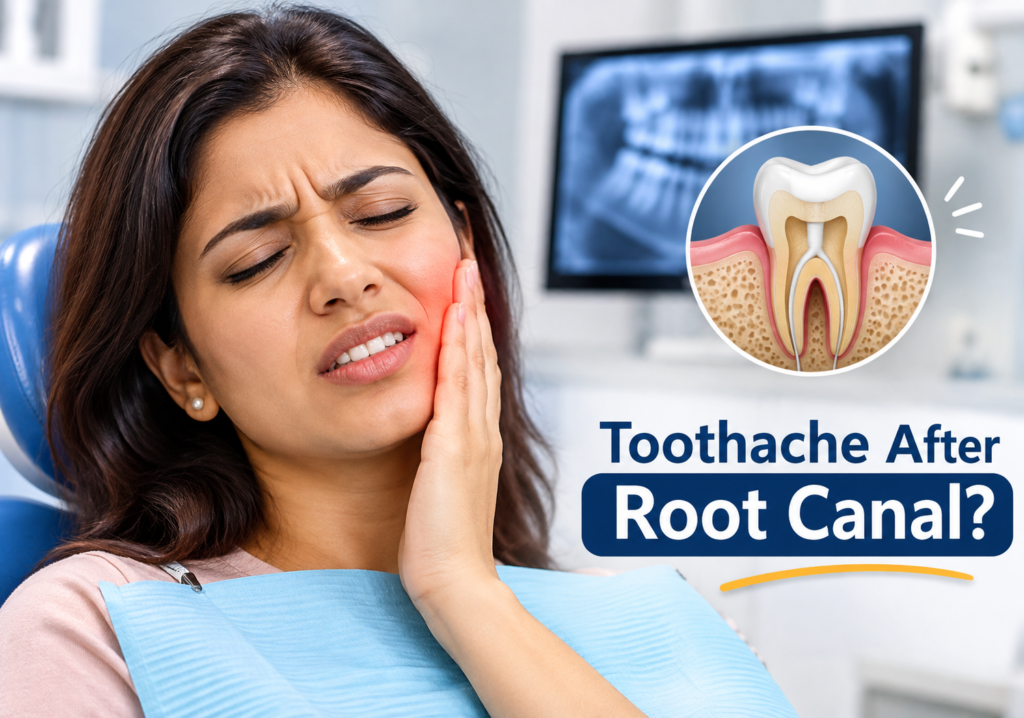
Some soreness is expected. A mild toothache after root canal usually peaks in the first 24 to 48 hours and settles within a few days to a week, while the tissue around the root heals. Pain that gets worse after day three, comes with swelling or fever, or is still there after two weeks is not normal. That needs a dentist to look at it.
A common call at our Park Street clinic comes on day two. The patient sounds worried: “I thought the root canal was supposed to stop the pain.” It does stop the deep, throbbing nerve pain. What’s left is the soreness of healing, which feels different and fades. The tricky part is telling the two apart, so this guide covers exactly that.
Worried about pain after your root canal? Our team at Radix Dental Care in Park Street can check your tooth, adjust your bite, and tell you whether the soreness is normal healing. Book a check-up today.
Why Does a Tooth Hurt After the Nerve Is Removed?
During root canal treatment, the dentist removes the infected pulp from inside the tooth. The nerve inside the tooth is gone. But the tooth sits in a cushion of tissue called the periodontal ligament, and that ligament has nerves of its own.
Cleaning and shaping the canals irritates this tissue. If the tooth had an infection at the root tip before treatment (doctors call it apical periodontitis), the bone and tissue there need time to recover too. So the ache you feel is coming from around the tooth, not inside it. That’s why it often hurts most when you bite down.
What Normal Pain After Root Canal Feels Like
Normal healing follows a fairly predictable pattern:
- Days 1 to 2: a dull ache and tenderness when biting. This is usually the worst of it.
- Days 3 to 5: noticeably better each morning. You might still avoid chewing on that side.
- Day 7 onward: mostly gone, though tapping the tooth may feel slightly different for a couple of weeks.
Normal pain after root canal also responds well to regular painkillers. If a standard dose takes the edge off, that’s a good sign.
Is Gum Pain After Root Canal Normal?
Yes, in most cases. Gum pain after root canal often comes from the small clamp that holds the rubber dam in place, or from the injection site. The gum can look slightly red or feel bruised for two to three days. Warm salt water rinses help. A gum boil (a small pimple-like bump) or pus is a different matter and should be checked.
Signs Your Pain After RCT Is Not Normal
Call your dentist if you notice any of these:
- Pain that increases after the third day instead of easing
- Swelling of the face, cheek or jaw, even if it’s mild
- Fever, or a bad taste that keeps coming back
- The tooth feels “high” and hits first when you close your mouth
- Severe pain that painkillers don’t touch
- Your temporary filling has fallen out or cracked
Honestly, the high bite is the one people ignore most. It feels minor, but every time you swallow you’re tapping a healing tooth, and the pain after RCT can drag on for weeks because of it. A two-minute adjustment usually fixes it.
Common Reasons for Tooth Pain After Root Canal Treatment
When tooth pain after root canal treatment doesn’t settle, one of these is usually behind it.
The bite is too high. The filling or temporary sits slightly above the other teeth. Easy fix.
A canal was missed or not fully cleaned. Some teeth, especially upper molars, have extra canals that are hard to find. A follow-up dental X-ray helps show what’s going on at the root tip.
A crack in the tooth. A cracked tooth can cause sharp pain on biting that root canal treatment alone won’t solve.
The tooth has no permanent cover yet. A root-treated back tooth becomes brittle. Leaving it with only a temporary filling for months lets bacteria seep back in and raises the risk of fracture. If you’ve wondered whether you really need a cap, our guide on whether capping is necessary after RCT explains when it matters most.
A flare-up of infection. Occasionally the body reacts strongly in the first few days, causing swelling and throbbing. In rarer cases, a dental abscess forms and needs drainage or antibiotics.
How to Ease a Toothache After Root Canal at Home
For normal post-treatment soreness, these simple steps help most patients:
- Take the painkiller your dentist recommended, on schedule for the first day or two rather than waiting for the pain to build. Anti-inflammatory medicines (NSAIDs) often work well here, but check with your dentist first if you have stomach issues, asthma or take blood thinners.
- Chew on the other side until the tooth has its final crown.
- Skip hard foods like nuts and sticky ones like toffee.
- Rinse gently with warm salt water two or three times a day for gum soreness.
- Hold a cold pack against your cheek for 10 to 15 minutes at a time on day one.
- If you were given antibiotics, finish the full course.
Don’t put aspirin directly on the gum. It’s an old home remedy that burns the tissue and makes gum pain worse.
When Should You See a Dentist or Endodontist?
Here’s a simple rule. If the pain is easing a little each day, give it a week. If it’s flat or getting worse after three days, or you have any swelling, book a visit now rather than waiting it out.
Most cases are handled by your general dentist. Complicated situations, like a curved root, a missed canal or a tooth that needs retreatment, may go to an endodontist, who specialises in root canals. Not sure who does what? This breakdown of an orthodontist vs dentist vs endodontist makes the differences clear.
And once the tooth has healed, protecting it with a well-fitted crown is what keeps it in your mouth for the long run. Our crowns and bridges page covers the material options, from metal-ceramic to zirconia.
Still Sore After a Few Days? Get It Checked
A toothache after root canal that’s fading is your body doing its job. One that isn’t fading is telling you something, and most of the causes are quick to fix once they’re found. If you’re in Kolkata, our Root Canal Specialist in Park Street can examine the tooth, take an X-ray if needed, and adjust your bite in the same visit.
Don’t wait out pain that’s getting worse. Call Radix Dental Care or book your appointment online for a quick post-RCT check-up.
FAQs
How long does pain last after a root canal?
Usually three to seven days. Tenderness when biting can linger for up to two weeks, but it should keep improving.
Why does my tooth hurt more 3 days after a root canal?
Pain that rises after day three may point to a high bite, leftover infection, or a flare-up. It isn’t typical, so contact your dentist rather than waiting.
Can I eat normally after RCT?
Soft foods are fine once the numbness wears off. Avoid chewing hard or sticky food on that side until the permanent crown is fitted, since the tooth can crack.
Is it normal to have gum pain after root canal?
Mild gum soreness for two to three days is common, mainly from the clamp or the injection. A bump with pus, or gum swelling that grows, needs a dental check.
Does a failed root canal hurt?
Sometimes. A failed root canal can cause pain on biting, swelling, or a gum boil, but it can also be silent and only show up on an X-ray. That’s why follow-up visits matter.
Can a root canal tooth get infected again years later?
Yes. If the crown leaks, the tooth cracks, or a canal was missed, bacteria can return even years later. Retreatment often saves the tooth.