

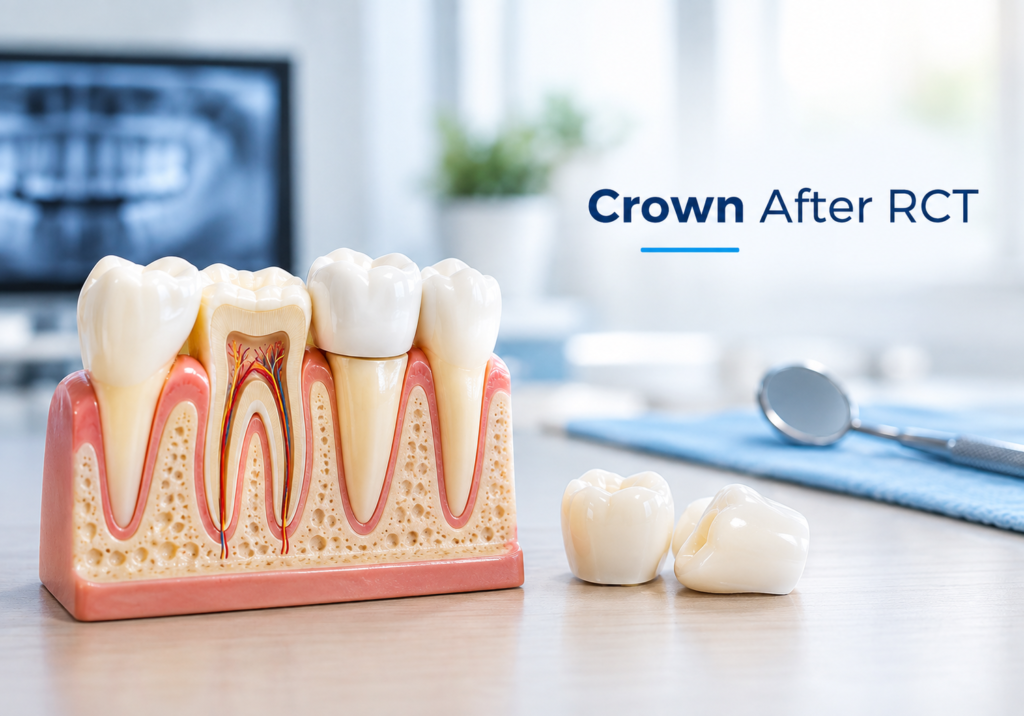
Is capping necessary after RCT? Most patients hear this question the moment their root canal wraps up, and the honest answer is: it depends. A capped tooth isn’t a formality tacked onto the bill — in a good number of cases it’s the difference between a tooth that lasts another twenty years and one that cracks at the worst possible moment. But not every root-canal-treated tooth needs one, and knowing which category yours falls into can save you both money and a second trip to the chair.
In most back teeth (molars and premolars), a cap is strongly recommended because these teeth absorb heavy chewing force and become brittle after treatment. Front teeth, which take far less bite pressure, sometimes manage fine with just a filling. The real decision comes down to four factors: which tooth it is, how much natural structure is left, how much force it takes daily, and how long you want the result to last. None of these are guesswork — a quick clinical check after treatment usually tells your dentist exactly where your tooth stands.
RCT and Capping of Teeth: How the Two Procedures Connect
Root canal treatment removes infected or inflamed pulp from inside a tooth, cleans the canals, and seals them. That part restores health, but it does nothing to restore strength. Understanding how these two treatments relate helps explain why a dentist might recommend both — one treats the infection, the other protects what’s left of the tooth from everyday wear. Our team walks patients through this at every Root Canal Treatment in Esplanade appointment, ending with an honest conversation about whether a cap makes sense for that particular tooth, rather than a blanket recommendation for everyone.
Is Cap Necessary After Root Canal? What Dentists Actually Look At
Patients often ask this before their appointment even ends, and there’s no single yes-or-no answer, because it hinges on how much of the tooth’s original structure survived the procedure. A tooth that lost a small amount of enamel to decay might only need a filling. One that had a large cavity, multiple canals, or a cracked cusp before treatment usually needs reinforcement because the remaining shell is thinner and more prone to fracturing under normal biting pressure.
4 Factors That Decide Whether You Need an RCT Tooth Cap
Dentists weigh a handful of practical details before recommending one. Here’s what actually matters:
1. Which Tooth Was Treated
Molars and premolars do the heavy lifting during chewing, so they almost always benefit from a crown after treatment. Front teeth (incisors and canines) face less force and sometimes get by with a durable filling instead.
2. How Much Tooth Structure Remains
If more than half the natural crown was removed to treat decay or access the canals, the tooth is structurally weaker and far more likely to crack without a cap.
3. The Size of the Access Opening
Treatment requires drilling into the tooth to reach the pulp chamber. A wider opening leaves thinner walls behind, which raises the risk of fracture over time.
4. Your Bite Pattern and Habits
People who grind their teeth at night, chew ice, or have a naturally heavy bite put extra stress on treated teeth, making a protective cap a safer long-term choice even on teeth that might otherwise scrape by without one.
After Root Canal Treatment Is Crown Necessary in Every Single Case?
Not quite. A crown becomes essential mainly when the tooth sits in the back of the mouth or has lost significant structure — in those situations, skipping it raises the odds of a fracture that can’t always be repaired. Front teeth with minor damage, strong remaining walls, and a light bite sometimes do fine with a composite filling alone. A dental crown is designed to fully cap or encircle a tooth once its natural structure has been significantly reduced, which is exactly the scenario a heavily treated back tooth is usually in.
What Happens If You Skip the Cap?
Going without one isn’t automatically a mistake, but it does carry risks worth weighing:
- The tooth can develop small cracks that gradually worsen with everyday chewing.
- A fracture below the gumline may make the tooth unsalvageable, meaning extraction instead of a simple repair.
- Bacteria can occasionally re-enter an unsealed canal system, undoing the benefit of the original treatment.
- Untreated cracks tend to get more expensive to fix the longer they’re ignored, often costing more than the crown would have.
- Chewing patterns can shift as patients unconsciously favor the untreated side, which sometimes leads to unrelated jaw or bite discomfort over months of avoidance.
So, Is Capping Necessary After RCT?
For back teeth doing most of the daily chewing work, yes — a cap is close to essential. For front teeth with minimal damage, it’s a judgment call your dentist should make chairside, based on how much of the tooth is left and how it functions in your bite. Either way, the decision shouldn’t be guesswork; it should follow a proper clinical exam.
Frequently Asked Questions
Does every root canal treated tooth need a cap?
No. It’s usually necessary for molars and premolars but optional for some front teeth with minor damage.
How soon after RCT should the cap be placed?
Most dentists recommend placing it within two to four weeks, since a temporary filling isn’t built for long-term chewing.
Can a root canal tooth survive without a crown?
Sometimes, especially front teeth, but the risk of fracture rises significantly over time without one.
Does the cap after RCT cost more than the root canal itself?
It can, depending on the material chosen — porcelain, metal, or zirconia crowns vary widely in price.
Is it painful to get a cap after root canal treatment?
No, the tooth is usually numbed, and most patients feel only mild pressure during the fitting.
What material is best for a cap after RCT?
It depends on the tooth’s location — zirconia and porcelain-fused-to-metal crowns handle back-tooth chewing force well, while all-ceramic crowns are often preferred for front teeth because they blend naturally with surrounding enamel.