

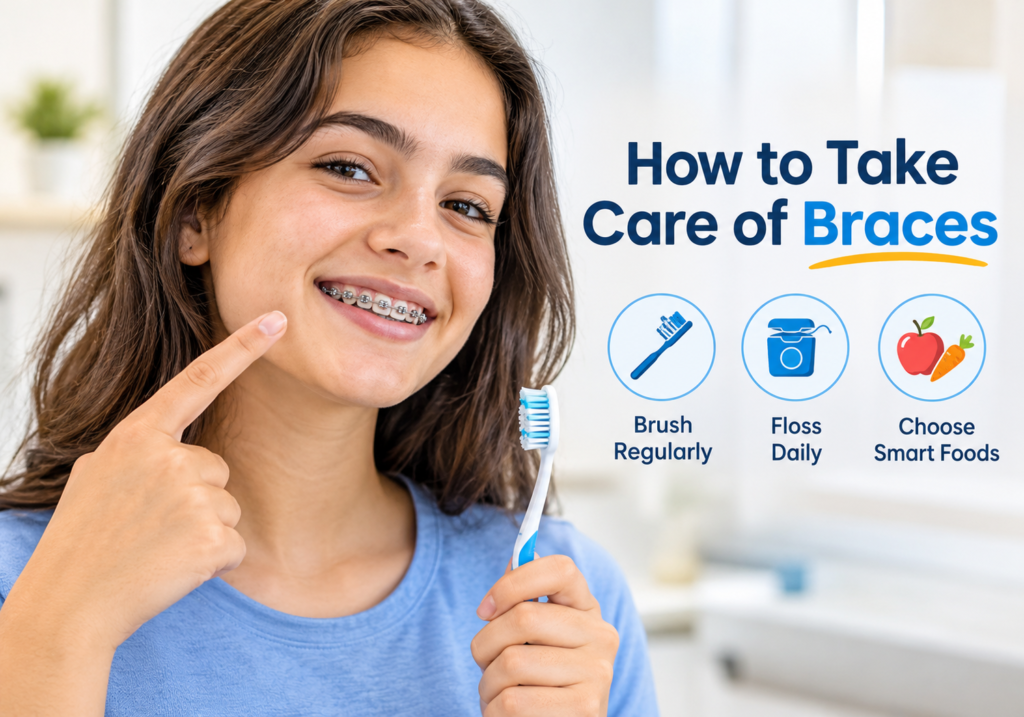
Fitting day usually ends with a sore mouth, a small packet of wax and a list of instructions that’s easy to forget by evening. Knowing how to take care of braces is what decides whether you finish treatment with straight, healthy teeth or with chalky white marks around every bracket. None of it is difficult. It takes a few extra minutes a day and some changes to what goes on your plate.
Below, you’ll find the daily cleaning routine, food choices, ways to manage soreness, and what to do when something breaks.
For anyone asking how to take care of braces, the basics are simple.
- Brush after every meal for at least two minutes, angling the brush above and below the brackets.
- Floss or use an interdental brush once a day.
- Skip hard, sticky and chewy foods that bend wires or loosen brackets.
- Use orthodontic wax and cold foods to ease soreness.
- Call your orthodontist when a bracket comes loose or a wire starts poking.
Why Daily Care Matters During Orthodontic Treatment
Dental braces add dozens of tiny ledges where food gets caught. Left there, it turns into dental plaque, and plaque that sits around brackets for weeks weakens enamel. The result often shows up only on the day the braces come off, as white spots that don’t go away. Puffy, bleeding gums are another common sign that cleaning has slipped.
Most treatment runs 12 to 24 months. Over that stretch, small lapses add up, so learning how to care for braces properly in the first few weeks saves a lot of trouble later.
How to Care for Braces When Brushing and Flossing
A Brushing Routine That Reaches Around Brackets
A quick everyday brush misses most of the area hidden behind the wire. Try this sequence instead:
- Rinse with water to loosen stuck food.
- Hold a soft brush at a 45-degree angle and clean along the gumline.
- Tilt the brush down to clean above each bracket, then tilt it up to clean below.
- Brush the chewing surfaces and the inner sides of your teeth.
- Check in a mirror. Clean brackets look shiny, while missed ones look dull or fuzzy.
Stick to a fluoride toothpaste. If your risk of decay is higher, your dentist may also suggest a fluoride mouthwash before bed.
Flossing with Wires in the Way
This is the step people drop first, and it’s the one that keeps gums healthy. A floss threader lets you guide regular dental floss under the main wire. Super floss, with its stiff end, does the same job a little faster. A water flosser is handy for flushing out debris, but it works best alongside floss rather than in place of it.
Tools Worth Keeping at Home
| Tool | What it does | How often |
| Soft or orthodontic toothbrush | Cleans around and between brackets | After every meal |
| Interdental brush | Reaches under wires and between brackets | Once a day |
| Floss threader or super floss | Cleans between teeth and at the gumline | Once a day |
| Water flosser | Flushes out loose food | Optional, daily |
| Orthodontic wax | Covers sharp or rubbing parts | As needed |
Keep a travel brush in your bag. When brushing isn’t possible at school or work, a good rinse with water after eating still helps.
Food and Braces, What to Eat and What to Skip
Most breakages happen at mealtimes. Hard foods knock brackets off, sticky foods tug at wires, and sugary drinks feed the bacteria you’re trying to keep in check.
| Better choices | Foods to avoid or cut up |
| Soft rice, dal, khichdi | Nuts and hard candies |
| Pasta, idli, upma | Popcorn (husks get trapped) |
| Eggs, paneer, fish | Toffee, chewing gum, caramel |
| Bananas, papaya, cooked vegetables | Whole apples and raw carrots (slice them thin) |
| Yoghurt, smoothies, soups | Hard rolls and crusty bread |
| Water | Fizzy drinks and packaged juices |
A few eating habits make a difference too:
- Cut food into small pieces and chew with your back teeth.
- Take corn off the cob and meat off the bone before eating.
- Break the habit of chewing pens, nails or ice, which damages more brackets than most meals do.
Dealing with Soreness and Pain
Some ache is expected for three to five days after the braces go on, and for a day or two after each tightening. Your teeth are being moved, and the inside of your cheeks needs time to toughen up against the metal.
What helps:
- Cold food and drinks. Chilled water, curd or ice cream can numb the area slightly.
- Soft meals for a few days. Rest your teeth from hard chewing.
- Orthodontic wax. Roll a small piece and press it over any bracket rubbing your cheek.
- Warm salt water rinses. Half a teaspoon of salt in a glass of warm water calms mouth sores.
- Over-the-counter pain relief. Ask your dentist which one suits you and follow the pack directions.
If the pain lasts beyond a week or keeps getting worse, have it checked instead of waiting.
Braces Emergencies and What to Do
Serious emergencies are uncommon, but small problems happen often. Here’s how to manage them until you can see your orthodontist.
| Problem | What to do at home | How soon to call |
| Loose bracket | Leave it on the wire, cover with wax if it rubs | Within a few days |
| Poking wire | Push it flat with a cotton bud or cover with wax | Within a day or two |
| Lost elastic band | Replace it if you have spares | At your next visit |
| Broken wire | Cover the end with wax, don’t cut it yourself | Same or next day |
| Injury to mouth or face | Rinse, apply a cold pack | Immediately |
Save any piece that falls off and bring it to your appointment. Never try to glue a bracket back on yourself.
Small Habits That Protect Your Braces
Daily care comes down to consistency. These habits matter over the full length of treatment:
- Wear a mouthguard for cricket, football or any contact sport.
- Keep every adjustment appointment, since missed visits can drag treatment out.
- Wear elastics exactly as instructed, because skipped days slow tooth movement.
- Book a professional cleaning every six months.
- Hold off on whitening until the braces are removed, and read up on the side effects of bleaching teeth before you plan it.
After treatment, a retainer keeps your teeth in their new position. Some people also choose small cosmetic touches, such as reshaping or bonding, through Smile Correction Treatment in Park Street.
FAQs
How long should I brush with braces?
At least two minutes each time, ideally after every meal. Give a few extra seconds to teeth where food tends to collect.
Can I whiten my teeth while wearing braces?
It’s better to wait. Whitening with brackets on can leave uneven patches once they come off, so most dentists recommend doing it after treatment.
Is bleeding while flossing normal?
Mild bleeding in the first week or two usually means the gums are inflamed from plaque. It should settle with regular flossing. If it doesn’t, see your dentist.
What happens after braces come off?
You’ll wear a retainer to hold your teeth in place, usually full-time at first and later only at night. Your orthodontist will tell you how long to continue.
Getting Expert Help in Park Street
Home care is half the job. The other half is regular check-ups with a team that can catch problems early. Whether you’re about to start braces or need help partway through, our team offers orthodontic treatment in Park Street with clear guidance at every stage. You can book an appointment with Radix Dental Care for a consultation or an urgent visit.